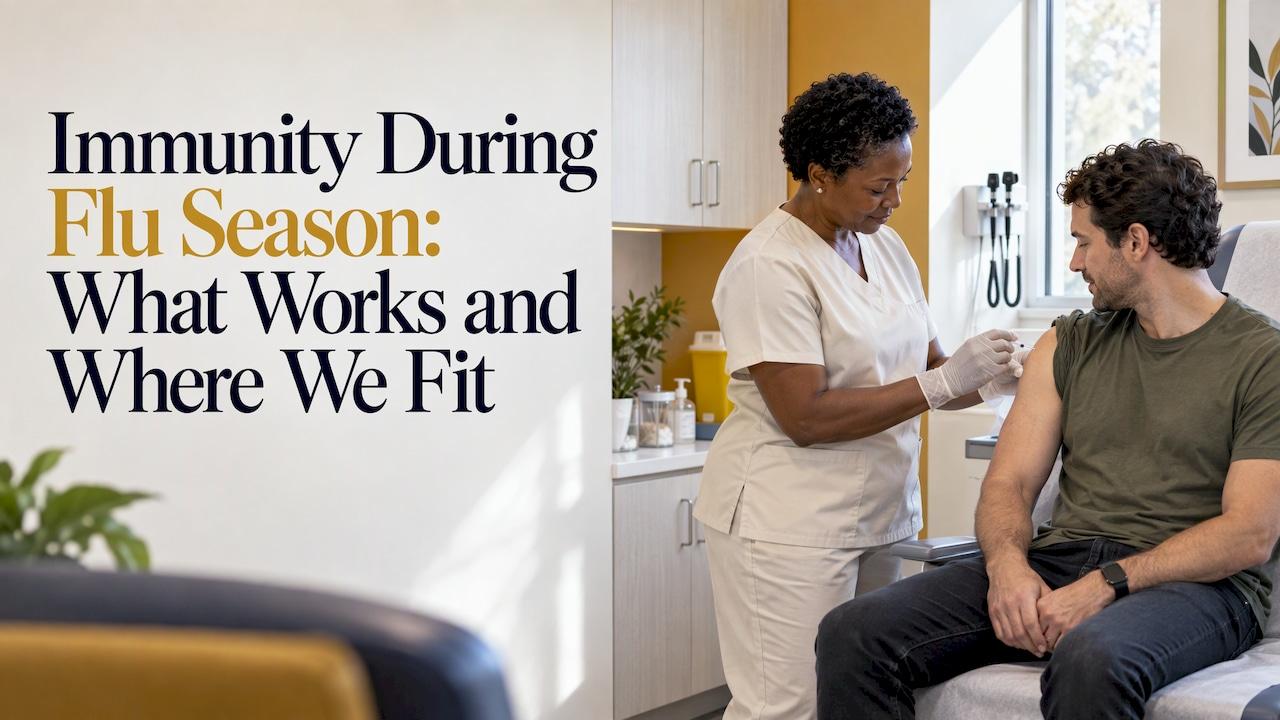
The strongest flu-season plan stacks three layers: the yearly flu vaccine, daily habits that keep your body running well, and targeted nutritional support when stress, travel, workouts or long shifts have drained you. We are a nurse-led wellness lounge on Long Island, and we work on that third layer: hydration, vitamins and recovery. This guide puts all three in order so you know what each does and when to use it.
TL;DR
- The CDC calls yearly flu vaccination the first and most important step and recommends it for everyone 6 months and older. Ideally get it in September or October.
- Sleep, food, movement, handwashing and cleaner air are the daily base that CDC immune-health guidance points to.
- Vitamins matter most when you are low on them. Stress, heavy training and poor intake are the moments when extra support makes sense.
- At Vitaluxe, IV hydration, high dose vitamin C, B12 and membership options are delivered by a nurse-led team in a boutique setting, as a complement to the vaccine and your habits.
Table of Contents
- Start with the flu vaccine
- The daily habits that carry the load
- Eating for immune function
- Vitamins: where support makes sense
- Where IV therapy fits in flu season
- A sensible seasonal plan
- Why a nurse-led setting matters
- Our perspective
- Book your flu-season support
- FAQ
- Sources
Start with the flu vaccine
Nothing else on this page replaces it. The CDC recommends a seasonal flu vaccine for everyone 6 months and older and describes it as the first and most important action to reduce flu risk. Vaccines train the body to recognize and fight a specific disease without the risks of a full-blown infection.
Timing matters. The CDC's 2026-27 guidance says most people who need one dose should ideally be vaccinated in September or October, and that vaccination should continue as long as flu viruses are circulating and unexpired vaccine is available. If you have not had yours yet this season, a late shot still counts. The same guidance generally advises against July or August vaccination for most adults, because protection can wane over the season.
Seasons also differ in how well the vaccine matches circulating viruses. The CDC's March 2026 interim report found that 2025-26 vaccination still provided protection, with estimates of 38% to 41% against outpatient visits in people under 18 and 22% to 34% in adults. Even a partial match helps, and that is why the shot stays at the top of the list.

When the peak arrives changes every year. The CDC's report on the 2024-25 season says activity peaked in early February 2025, but that is one season, not a rule. Plan for the whole winter, not one month.
The daily habits that carry the load
The CDC's immune-health page is plain about what supports your body through respiratory-virus season: healthy eating, enough sleep, physical activity, not smoking, handwashing, cleaner indoor air and distance from sick people. None of it is glamorous. All of it adds up.
A few ways to make those habits stick in real life:
- Sleep. Short nights are the first thing to go during exams, night shifts and holiday travel. Protect your sleep window, since rest touches everything from mood to how you recover. Even something as specific as how sleep affects oral health shows how far its effects reach.
- Air and surfaces. Open a window when you can, wash your hands after shared spaces, and keep distance from people who are visibly ill.
- Stay home when you are sick. The CDC advises staying home until symptoms are improving overall and you have been fever-free for at least 24 hours without fever-reducing medicine. That protects your roommates, your crew and your patients.
- Movement. Regular activity is on the CDC's list. Keep training, but give your body recovery time when workload climbs.

Eating for immune function
Your immune cells are built and fueled from what you eat. The CDC recommends protein foods such as chicken, fish and beans, plus vegetables, fruits, whole grains and healthy fats to supply nutrients that support immune-cell function.
The NIH Office of Dietary Supplements notes that vitamins A, C, D and E, plus selenium and zinc, are important for normal immune function, and that deficiencies in these nutrients can weaken immunity and raise the chance of infection. The practical takeaway: being low in a nutrient is what hurts, so the goal is to stay well supplied, not to chase mega-doses.
That is also why a blanket "immune booster" rarely makes sense. Your needs depend on what you eat, how much you sleep, how hard you train and how much stress you carry. It is a personalized question, and a nurse can talk it through with you.
Vitamins: where support makes sense
Searches for immune support vitamins are some of the most common in flu season, so here is how to think about them.
Vitamin C. The NCCIH's review describes the evidence for colds as mixed for most people, with possible benefit for people under severe physical stress. A 2023 expert panel review adds that vitamin C taken in advance may reduce illness severity or duration in otherwise healthy men under extreme physical or mental stress, and calls for better trials and dose comparisons. That points to a clear use case: demanding weeks, such as finals, double shifts or race training.
Vitamin D. NIH reports mixed trial results for preventing respiratory infections, with more benefit seen in people whose baseline vitamin D was low. Winter on Long Island means less sun, so your own level is worth knowing. Our team can explain how a vitamin D injection fits, who it is for and what it costs.
B vitamins. B12 supports energy metabolism, and for people who feel run down it is a quick, low-commitment option. Our guide to when B12 shots help walks through the evidence, and a B complex injection covers the wider family.

Where IV therapy fits in flu season
IV therapy delivers fluids and nutrients directly into the bloodstream, which makes it a practical tool when you are depleted, dehydrated or pushing through a heavy stretch. It supports your body's own resources. It does not replace the vaccine, and we do not present it that way.
The situations where our clients tend to look for it:
- College students run on short sleep, irregular meals and shared housing. Hydration and nutrient support can help with recovery between exams and weekends. We offer special discounts for college students.
- First responders work long, irregular shifts and absorb a lot of physical and mental stress. We offer special discounts for first responders too.
- Athletes and active adults want recovery after hard training, when fluids and nutrients run low.
- Anyone feeling worn down at a seasonal change, when routines shift and energy dips.
Hydration itself is a real piece of this. Our article on IV hydration versus oral hydration explains where each makes sense, and our piece on immunity drips for colds and flu covers how we think about timing. If you want to understand exactly what goes into a bag, read what is actually in an IV drip.
What our menu looks like
Prices below are as published on our site.
| Option | Price | Good for |
|---|---|---|
| Myers+ | $220 | A broad vitamin and mineral blend for general wellness |
| Reboot | $220 | Recovery after a hard stretch |
| Energy Vital Spark | $220 | Low-energy days |
| Endurance | $220 | Athletic recovery |
| High Dose Vit C | $185 to $395 | Demanding, high-stress periods |
| Normal Saline | $120 | Straightforward hydration |
| B12 injection | $25 | A fast energy-support add-on |
| Red Light Therapy | $35 | Skin, recovery and cellular wellness sessions |
We also offer glutathione ($220), NAD+ IV (125 mg at $199, 250 mg at $334, 500 mg at $624), NAD+ IM 25 mg ($65), L-Carnitine ($25) and peptide services. The full list is on our services page.
A sensible seasonal plan
Here is how we would sequence a flu season for someone in our target audience:
- September or October: get your flu vaccine. Book it before the holidays hit.
- All season: hold the basics: sleep, whole foods, movement, handwashing, fresh air.
- Before a heavy stretch: exams, travel, a run of night shifts or a big race. This is when stress-targeted support such as high dose vitamin C or a Myers+ drip lines up with the research lead above.
- After a hard push: hydration and recovery support. A saline or Reboot session, or a B12 shot, can be a short visit.
- If you get sick: stay home until you meet the CDC's fever-free guidance and contact your own doctor about symptoms, especially if you have a chronic condition.
If you are pregnant, take daily prescription medication or have a heart, kidney or autoimmune condition, speak with your doctor before any IV or injection, and tell our nurse about your history, allergies and medications at your visit.
Why a nurse-led setting matters
An IV is a medical service. Our approach is nurse-led, personalized and results-driven, and our boutique setting is built around clinical safety and attentive care. That means someone qualified asks about your health, your goals and your schedule, and matches the drip to you rather than handing you a generic menu. For first responders and students who have little time, that personalization is the point of the visit.
Our perspective
We meet people in the exact moments flu season makes hardest: a nursing student in finals week, a firefighter after back-to-back calls, a runner three weeks from race day.
Our view is simple. The vaccine and good habits come first, and we say so. What we add is the part people struggle to do alone: replenishing fluids and nutrients quickly, with a nurse who knows your history and sets the plan around you.
That is why we built our menu around real needs: hydration, cellular energy, recovery and immune-supporting nutrients, plus membership options for people who want steady support all winter. When your body is carrying extra stress, the right support at the right time makes a difference you can feel.
Debbie
Book your flu-season support
If you want a plan built around your schedule, start with a single session. A Myers+ drip is $220, Normal Saline is $120 and a B12 shot is $25. Many clients prefer steady support through the cold months: our Essential membership is $205 per month and Elite is $415 per month, both listed on our membership page. You can also look at our packages. We serve East Massapequa, Massapequa, Wantagh, Merrick, Babylon, Lindenhurst and nearby Long Island communities.

Students and first responders can ask about their discount when booking.
FAQ
Can an immune boost IV drip replace the flu shot?
No. The CDC names yearly vaccination as the first and most important step against flu. We see IV therapy as a complement for hydration and nutrient support alongside the vaccine, not a substitute for it.
When is the best time to get vitamin support during flu season?
The moments of heavy stress or depletion are the natural fit: exam weeks, long shift runs, hard training blocks and seasonal changes. Research on vitamin C points to the possible benefit for people under severe physical or mental stress. A nurse can help you time it.
Which immune support vitamins matter most?
NIH lists vitamins A, C, D and E, plus selenium and zinc, as important for normal immune function. Start with a varied diet, then talk with our nurse about vitamin C, vitamin D and B vitamins based on your lifestyle and goals.
What should I do if I already have the flu?
Stay home until your symptoms are improving and you have been fever-free for at least 24 hours without fever-reducing medicine, per CDC guidance. Contact your doctor if symptoms are severe or you have a chronic health condition. Once you are well, hydration and recovery support can help you get back to your routine.
Who is the best candidate for an immunity-focused drip?
Health-conscious adults, college students, first responders and athletes who feel run down or under heavy stress are the people we see most. Tell our nurse about your medical history and medications first, so the session is matched to you.
Sources
- Preventing Seasonal Flu, CDC
- Support Your Immune Health, CDC
- Interim Clinical Considerations for the Use of Seasonal Influenza Vaccines, CDC
- Interim Estimates of 2025-26 Seasonal Influenza Vaccine Effectiveness, CDC MMWR
- Influenza Activity in the United States during the 2024-25 Season, CDC
- Dietary Supplements for Immune Function and Infectious Disease, NIH ODS
- Colds, Flu, and Complementary Health Approaches, NCCIH
- Immune Supplements Under the Magnifying Glass: An Expert Panel Review, 2023
- Why Sleep Affects Oral Health