
IV fluids are reserved for moderate to severe dehydration, or for situations where you physically can't keep oral fluids down. If you're dizzy, confused, urinating rarely or not at all, or you've been vomiting for hours, that's the threshold. Clinicians typically reach for normal saline or lactated Ringer's in an ER or urgent care setting. Confusion, fainting, or a racing heart means skip the home remedies and get seen immediately.
TL;DR:
- IV fluids are reserved for moderate to severe dehydration, especially when symptoms like confusion, fainting, or inability to keep fluids down occur.
- Normal saline is the default IV choice for straightforward dehydration, but lactated Ringer's is preferred for complex fluid and electrolyte imbalances.
- Rehydration sessions typically last 30 to 60 minutes, with improvements often felt quickly, though full recovery depends on the dehydration severity.
- IV treatment should always include careful monitoring of vital signs, urine output, and electrolytes to prevent complications like fluid overload or imbalances.
- Outpatient clinics and nurse-led centers provide safe, supervised IV hydration options for non-emergency cases, with the need for follow-up labs and reassessment.
Table of Contents
- What Are IV Fluids and Why Do They Work Faster Than Water?
- When Do You Need an IV for Dehydration? Signs and Red Flags
- What IV Fluids Treat Dehydration, and How Do Doctors Choose?
- What Happens During IV Rehydration Treatment?
- Where to Get IV Fluids and What Safety Monitoring Looks Like
- How Long Does Recovery Take After IV Rehydration?
- A Nurse-Led Option for Medically Indicated Hydration
- How Is an IV Line Placed for Dehydration Treatment?
- What Complications Can Happen During IV Insertion or Infusion?
- How Do IV Fluids Correct Electrolyte Imbalances?
- Clinician Perspective: Use IV Therapy Judiciously
- Get Medically Supervised IV Hydration at Vitaluxe Drip Lounge
- Sources
- FAQ
What Are IV Fluids and Why Do They Work Faster Than Water?
IV fluids deliver water, electrolytes, and sometimes glucose straight into a vein, bypassing the digestive system entirely. That's the whole appeal: your gut doesn't have to absorb anything, so a clinician can correct a fluid deficit in a fraction of the time it would take to drink your way back to normal. The Cleveland Clinic describes this route as treating or preventing dehydration when drinking fluids isn't effective or isn't possible, such as during severe vomiting or before surgery.
Most IV dehydration treatment uses isotonic crystalloids, fluids with a salt concentration close to your blood's, so they expand your circulating volume without yanking water into or out of your cells. That's different from what happens when you sip a sports drink.
Oral rehydration still wins for mild cases. It's cheaper, it doesn't require a needle, and your body handles it fine when your gut is working normally. The problem only shows up when vomiting, severe diarrhea, or altered mental status get in the way.
When Do You Need an IV for Dehydration? Signs and Red Flags
You don't need an IV for feeling a little parched after a hot afternoon. You need one when your body is showing it can't catch up on its own. Watch for:
- Confusion, disorientation, or unusual drowsiness
- Fainting or near fainting when standing up
- Rapid heart rate that doesn't settle down
- Urinating rarely, or urine that's dark and concentrated
- Vomiting that won't let you keep any liquid down
MedlinePlus lists severe thirst, dizziness, rapid pulse, confusion, and low urine output among the signs that warrant professional evaluation rather than home management.
Certain situations tend to escalate quickly: heat stroke, where core body temperature spikes and the body loses fluid fast enough to require emergency intervention; severe gastroenteritis with nonstop vomiting or diarrhea; and post-surgical fluid losses that outpace what a patient can drink. If you're seeing any red flag from the list above, go to the emergency room, not urgent care. If you're just running behind on fluids after a stomach bug and you're otherwise stable, an urgent care clinic or outpatient infusion setting usually handles it fine.
What IV Fluids Treat Dehydration, and How Do Doctors Choose?
Not all IV bags contain the same thing, and the choice matters more than most people assume.
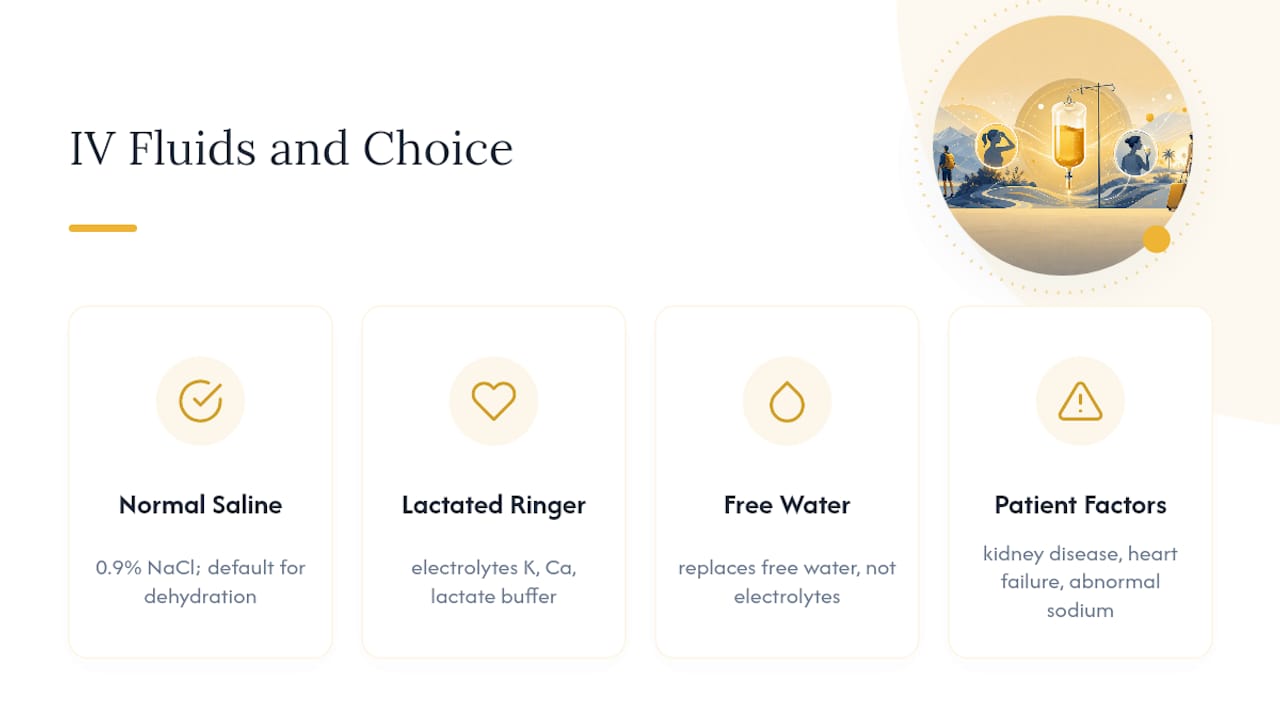
Normal saline (0.9% sodium chloride) is the default in a lot of settings. It's simple, widely available, and does the job for straightforward dehydration. Given in very large volumes, though, it can push chloride levels higher than the body likes, which is why some clinicians now lean toward alternatives for larger-volume resuscitation.
Lactated Ringer's contains a broader mix of electrolytes (potassium, calcium, and a lactate buffer) closer to natural blood plasma. It shows up often in trauma cases and more complex fluid losses. A pooled analysis on balanced crystalloids versus normal saline found that outcome differences between the two are usually small, and fluid choice should be individualized rather than automatic.
D5W (dextrose in water) and half normal saline serve narrower purposes, mainly replacing free water rather than electrolytes, and are used less often for straightforward dehydration.
Patient history changes everything here. Kidney disease, heart failure, and abnormal sodium levels all shift which fluid, and how much, a clinician will order.
What Happens During IV Rehydration Treatment?
The process is more routine than people expect. A clinician checks your vitals, asks about symptoms and how long you've been unable to keep fluids down, then places a small catheter, usually in a vein in your hand or forearm. From there, the ordered fluid runs at a set rate while your vitals and urine output get monitored throughout.
Sessions commonly run somewhere in the range of 30 to 60 minutes for straightforward cases, though this varies by how depleted you are and what's being infused. Many people start feeling noticeably better, less foggy, less lightheaded, within that window, though full recovery from moderate dehydration can take longer.
How many bags you need depends on the size of the deficit and how you respond. A single bag might be enough for mild to moderate cases. Ongoing losses, from continued vomiting or diarrhea, or lab work showing electrolyte imbalances, can mean a second round, or bloodwork to reassess before deciding what's next.
Where to Get IV Fluids and What Safety Monitoring Looks Like
Your setting depends on how sick you are. The emergency room is the right call for red-flag symptoms, confusion, fainting, or an inability to keep any fluid down. Urgent care handles moderate, stable dehydration without those alarm signs. Outpatient infusion clinics work for cases where a clinician has already assessed you and ordered straightforward hydration. Home infusion exists but is typically reserved for patients with an established treatment plan, not a first-time undiagnosed dehydration episode.
Clinical guidance from the NCBI Bookshelf stresses that IV fluid management should include daily reassessment and lab monitoring when fluids continue beyond the initial dose, along with a watch for complications like fluid overload or electrolyte swings.
What that monitoring looks like in practice:
- Vital sign checks throughout the infusion (heart rate, blood pressure, oxygen levels)
- Tracking how much fluid goes in versus how much urine comes out
- Repeat labs if therapy continues past the first bag or two
- A clear stopping point once fluid balance is restored
Pro Tip: If you're getting IV fluids somewhere other than a hospital, ask directly who is monitoring you during the infusion and what happens if you develop shortness of breath or swelling. A legitimate provider should have a clear answer.
Watch for worsening breathlessness, new swelling, chest pain, a severe headache, or a seizure during or after treatment. Any of those means immediate reevaluation, not a wait-and-see approach.
How Long Does Recovery Take After IV Rehydration?
Most people notice improvement within the infusion itself or shortly after, though how long the benefit holds depends heavily on what caused the dehydration in the first place and how severe it was. If the underlying issue, a stomach virus, heat exposure, medication side effect, isn't resolved, dehydration can creep back.
Repeat treatment or follow-up labs become more likely if losses are ongoing (persistent vomiting or diarrhea) or if initial bloodwork showed abnormal electrolytes that need rechecking. Once you're stable, the goal is transitioning back to oral fluids, water, broths, oral rehydration solutions, and staying ahead of future episodes with consistent intake, especially during illness or heat exposure.
A Nurse-Led Option for Medically Indicated Hydration
This article was put together with input from Debbie at Vitaluxedriplounge, where care is delivered under nurse-led supervision rather than as a self-serve add-on. For readers whose dehydration is confirmed and clinically appropriate for IV support, options like Normal Saline, Reboot, and Myers+ are administered with medical oversight, alongside discounts for first responders and college students. None of this replaces a clinical evaluation. If you're unsure whether you need an IV or just need more water, talk to a clinician first.
How Is an IV Line Placed for Dehydration Treatment?
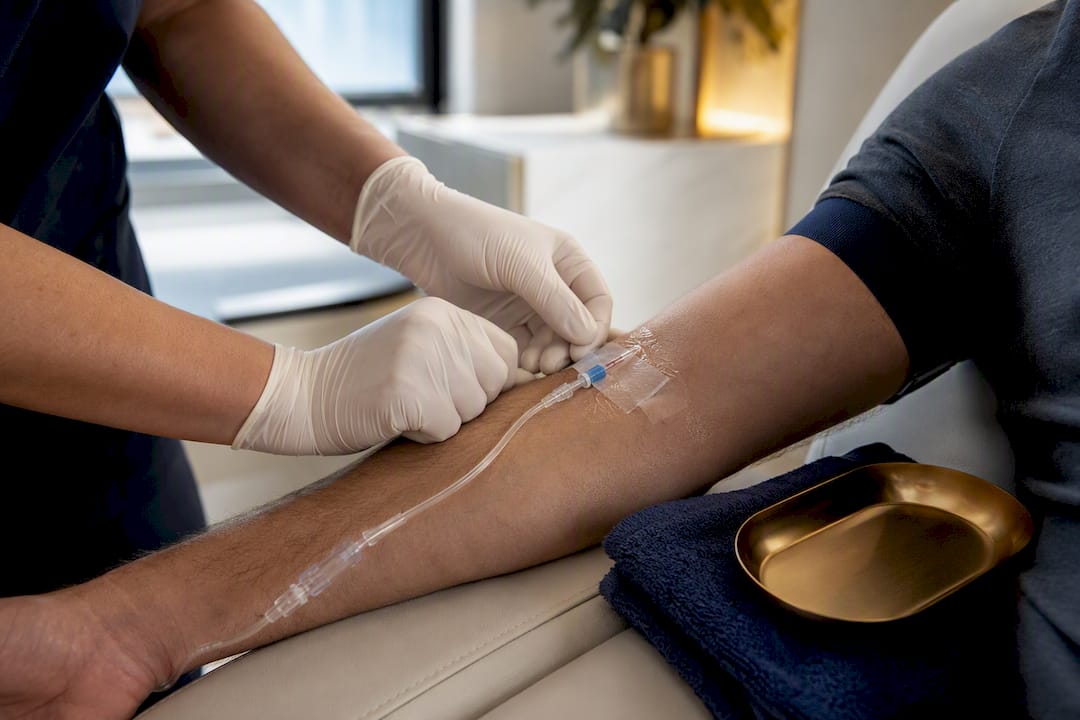
Site selection isn't random. Clinicians typically look for a vein on the back of the hand or in the forearm, favoring one that's straight, well-sized, and away from joints where movement could dislodge the catheter. Veins in the antecubital fossa (the crook of the elbow) get used too, though they're more prone to bending with arm movement.
Before insertion, the site gets cleaned with an antiseptic, usually chlorhexidine or an alcohol swab, and the clinician applies a tourniquet above the site to make the vein more visible and easier to access. A short, hollow needle called a catheter is then inserted at a shallow angle, and once blood return confirms placement inside the vein, the needle is withdrawn while a thin flexible tube stays in place. That tube gets secured with a clear dressing so the site can be monitored for problems.
Vein selection gets trickier in patients who are already significantly dehydrated, since low fluid volume makes veins harder to find and access. Clinicians experienced in this scenario often use a smaller-gauge needle or try a vein higher up the arm if hand veins have collapsed. In people with a history of IV drug use, chemotherapy, or repeated hospitalizations, finding a usable vein can take more than one attempt, and ultrasound guidance sometimes helps locate a vein that isn't visible externally. None of this is unusual or a sign of poor technique. It's simply part of how dehydration itself complicates the process of starting fluids.
What Complications Can Happen During IV Insertion or Infusion?
Two of the most common issues are phlebitis and infiltration, and neither is dangerous when caught early. Phlebitis is inflammation of the vein at or near the insertion site. It shows up as redness, warmth, tenderness, or a cord-like feeling along the vein, usually from irritation caused by the catheter itself or by fluids that are more acidic or concentrated than normal.
Infiltration happens when the IV fluid leaks out of the vein into the surrounding tissue instead of flowing into the bloodstream. You'll notice swelling, coolness, and tightness around the site, sometimes with visible puffiness. It's uncomfortable but generally resolves once the IV is removed and the fluid stops leaking.
Less common but more serious complications include infection at the insertion site, air embolism (extremely rare with modern equipment), and, in patients receiving large fluid volumes, fluid overload that stresses the heart and lungs. This is exactly why continuous monitoring during infusion matters, not just at the start. A clinician watching for early swelling or redness can pull the line and restart elsewhere before a minor issue becomes a bigger one.
If you notice increasing pain, spreading redness, or swelling that gets worse rather than better after your IV is removed, that's worth a follow-up call to whoever administered your treatment. Most complications resolve on their own, but ignoring a worsening site isn't the move.
How Do IV Fluids Correct Electrolyte Imbalances?
Dehydration rarely affects just water levels. Sodium, potassium, chloride, and bicarbonate all shift when your body loses fluid through vomiting, diarrhea, sweating, or blood loss, and correcting those imbalances is often as important as replacing the volume itself.
This is where fluid selection actually matters clinically rather than just procedurally. Someone with low sodium from excessive water intake needs a different approach than someone who's lost sodium and potassium through prolonged vomiting. Lactated Ringer's replaces a broader spread of electrolytes than plain saline, which is part of why it gets chosen for more complex fluid losses. In patients with significant electrolyte derangements, clinicians often order lab work before and during treatment specifically to track how sodium, potassium, and bicarbonate are responding to the fluid being given.
Correcting these levels too quickly carries its own risk, particularly with sodium, where rapid correction can cause serious neurological complications. That's part of why the NCBI clinical guidance on IV fluid therapy calls for careful, individualized assessment and repeat monitoring rather than a one-size-fits-all infusion rate. Electrolyte correction during IV rehydration isn't just about pouring in fluid. It's about matching the fluid composition and speed to what the body's bloodwork actually shows.
Clinician Perspective: Use IV Therapy Judiciously
IV rehydration is genuinely valuable when the clinical picture calls for it, but it works best under supervision, with clear monitoring and a stopping point. Ask your provider how they'll track your progress and what follow-up looks like.
— Debbie
Get Medically Supervised IV Hydration at Vitaluxe Drip Lounge
Some clinics offer a middle path between an ER waiting room and guessing at home remedies: nurse-led IV hydration in a clinic setting, without the multi-hour emergency department visit for cases that don't need one.

For dehydration that's clinically appropriate for IV support rather than a red-flag emergency, Vitaluxedriplounge offers options like Normal Saline for straightforward fluid replacement, along with Reboot and Myers+ for broader recovery and wellness support. If ongoing hydration is part of your routine, whether after workouts, travel, or recurring stress on your system, the Essential and Elite membership plans offer a structured way to stay ahead of it rather than scrambling when symptoms hit. Some clinics provide discounts for first responders and college students as part of a community commitment.
If you're not sure whether your symptoms warrant an IV or just more water and rest, it's advised to consult with a medical professional who can help determine the right next step before booking any treatment.
This article is general information, not a substitute for advice from a qualified doctor. Consult a qualified healthcare professional about your own circumstances before acting on anything here.
Sources
- IV Fluids (Intravenous Fluids): Types & Uses — Cleveland Clinic
- Dehydration — MedlinePlus
- IV therapy for vitamin replenishment: Health boost or expensive placebo? — Harvard Health
FAQ
What kind of IV is given for dehydration?
Normal saline and lactated Ringer's are the two most common fluids, chosen based on how severe the dehydration is and whether broader electrolyte replacement is needed. D5W and half normal saline get used in narrower situations, mainly for free water replacement rather than general rehydration.
At what point do you need an IV for dehydration?
You typically need an IV when dehydration reaches moderate to severe levels, meaning symptoms like confusion, fainting, rapid heart rate, very low urine output, or an inability to keep fluids down, according to MedlinePlus. Mild dehydration in an otherwise healthy person usually responds fine to oral fluids.
Will one IV bag hydrate you?
One bag is often enough for mild to moderate dehydration, but the exact volume depends on how depleted you are and whether losses are ongoing. Clinicians typically reassess after the first bag to decide if more fluid or lab work is needed.
How quickly do IV fluids rehydrate you?
Many people notice improvement within the infusion itself, since IV fluids skip digestion and enter the bloodstream directly. Full symptom resolution can take longer depending on the severity of the deficit and its underlying cause.
Is IV hydration worth it for everyday tiredness or a hangover?
For confirmed clinical dehydration, IV therapy is well supported. For general wellness or mild fatigue in healthy people, Harvard Health notes that oral rehydration remains first-line and elective IV drips lack strong evidence of added benefit beyond what drinking fluids provides.