
IV therapy can take the edge off some allergy symptoms in the short term, and specific IV antihistamines are medically indicated for acute reactions like urticaria. It is not a cure, and it does not replace allergy testing, immunotherapy, or a physician's judgment. Evidence for wellness drips is preliminary; evidence for approved IV antihistamines like QUZYTTIR is stronger. A clinic such as Vitaluxe Drip Lounge fits into this picture as a supervised setting for the adjunctive kind of care, not the primary one.
TL;DR:
- IV hydration can help relieve allergy congestion by thinning mucus and supporting mucociliary clearance, especially in dehydrated individuals.
- High-dose vitamin C administered intravenously has shown some symptom improvements related to oxidative stress, but evidence remains observational and not conclusive.
- Approved IV antihistamines like QUZYTTIR are effective for acute urticaria, with randomized trials showing less sedation and quicker relief compared to older options.
- Risks are low for patients with normal kidney function and no drug interactions, but high-dose vitamin C requires renal screening, and anaphylaxis, though rare, necessitates supervised medical settings.
- IV therapy serves as a supportive adjunct to standard allergy treatments and is not a substitute for allergen avoidance, immunotherapy, or long-term control methods.
Table of Contents
- How IV Therapy for Allergies Affects the Body
- What's in a Typical Allergy IV Drip?
- What Benefits Does Allergy IV Treatment Actually Deliver?
- Risks and Safety Checks Before You Book an Allergy IV
- What Happens During an Allergy IV Therapy Appointment
- The Research Behind Allergy IV Treatments
- When IV Therapy Fits Into an Allergy Care Plan
- How Vitaluxe Drip Lounge Supports Allergy Season Recovery
- Sources
- FAQ
How IV Therapy for Allergies Affects the Body
Allergy symptoms come from a cascade: histamine release, tissue swelling, mucus buildup, and in some people, systemic inflammation that leaves them wrung out and dehydrated. IV therapy for allergies works on a few of those levers, not the root cause.
Hydration is the most straightforward piece. Fluids delivered directly into the bloodstream help thin mucus and support mucociliary clearance, which is the mechanism that physically moves allergens and irritants out of the nasal passages and throat. That is why a stuffy, dehydrated allergy sufferer often feels looser and clearer after a saline-based infusion.
- IV vitamin C reaches far higher plasma concentrations than an oral dose ever could, which matters because oxidative stress pathways are part of how allergic inflammation perpetuates itself.
- Parenteral antihistamines bypass digestion entirely, so they act within minutes rather than the 30 to 60 minutes a pill needs.
- Antioxidant and mineral infusions may support the body's general inflammatory response, though this is adjunctive support, not a targeted allergy treatment.
None of this changes a person's underlying IgE sensitization. If you are allergic to birch pollen, an IV drip will not desensitize you. Only allergen immunotherapy does that.
What's in a Typical Allergy IV Drip?
Most clinics build allergy-support drips around a handful of familiar formulas, each with a different intended job. Recognizing what is actually in the bag helps you ask better questions before you sit down for one.

The Myers' cocktail is the granddaddy of IV wellness drips: a blend of B vitamins, vitamin C, calcium, and magnesium, originally used by Dr. John Myers for a range of chronic complaints. It is not allergy-specific, but many clinics use it as a base hydration and micronutrient formula during flare-ups.
Immune-support drips typically layer in zinc, vitamin D, and a glutathione push on top of vitamin C. Glutathione is the body's primary intracellular antioxidant, and some clinics position it as support for the oxidative burden that comes with chronic allergic inflammation.
- High-dose IV vitamin C: observational protocols have used doses as high as 7.5 grams per infusion, adjusted for body weight and kidney function.
- Hydration and electrolyte drips: straightforward saline with electrolytes, aimed at rapid rehydration and thinner mucus.
- IV antihistamines: cetirizine or diphenhydramine, reserved for acute urticaria or urgent-care level reactions, not routine seasonal congestion.
That last category is a different animal from the wellness drips above. It is treatment for an active reaction, delivered under clinical supervision, not a preventive or supportive infusion.
What Benefits Does Allergy IV Treatment Actually Deliver?
The strongest data point comes from an observational study tracking patients with respiratory or skin allergies who received high-dose IV vitamin C. In an interim subgroup analysis, disease-specific symptom scores dropped by an average of 4.71 points, and nonspecific symptoms like fatigue and general malaise dropped by 4.84 points. That is a meaningful signal, but it is observational, not a placebo-controlled trial, so it shows correlation more than proof of cause.
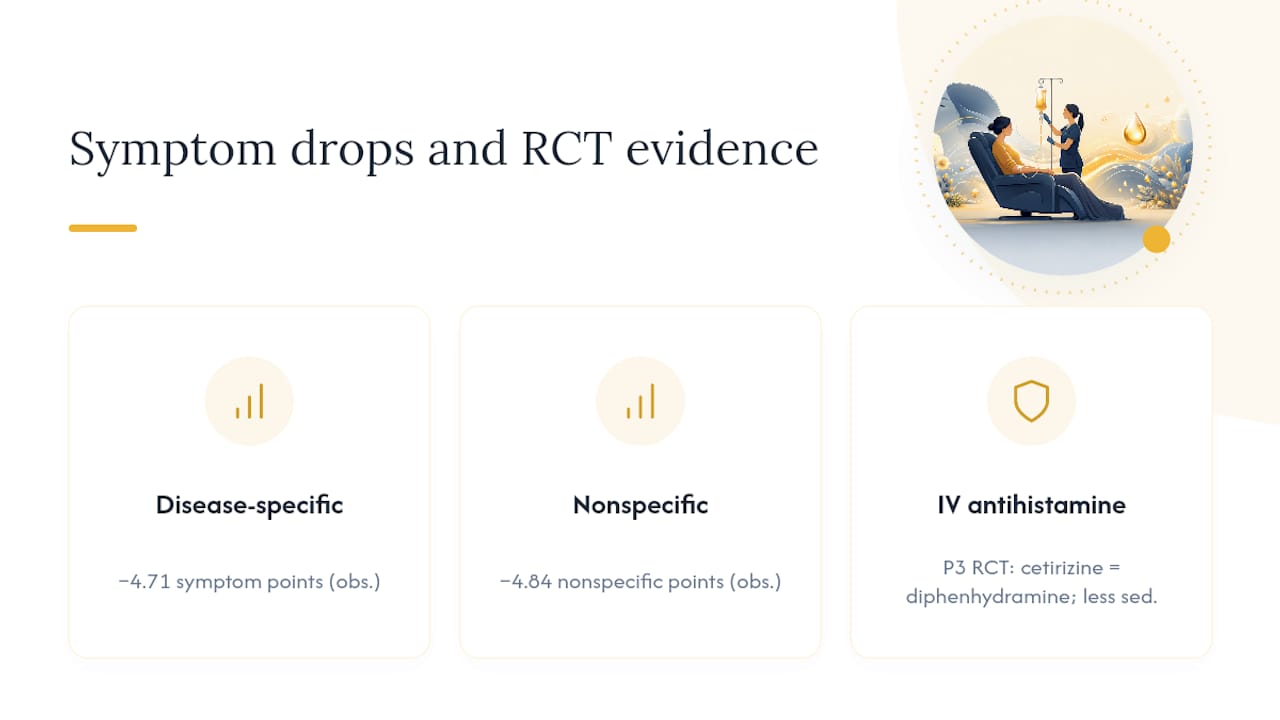
The clearer clinical win belongs to IV antihistamines. A phase 3 randomized trial found that IV cetirizine matched IV diphenhydramine for treating acute urticaria, with less sedation and shorter time in the treatment chair.
Beyond the lab data, patients commonly report faster hydration, more energy, and short-term relief from congestion after a drip. That is real, but it sits closer to comfort than cure.
Risks and Safety Checks Before You Book an Allergy IV
Any needle carries some risk of infection, bruising, or phlebitis at the injection site, and reputable clinics manage that with sterile technique and trained staff. Beyond the basics, allergy-specific IV protocols carry a few risks worth knowing before you book.
- High-dose IV vitamin C can raise oxalate levels, which is a real concern for anyone with kidney disease. Most reputable clinics screen renal function before administering large doses.
- First-generation antihistamines like diphenhydramine cross the blood-brain barrier and cause sedation. That is one reason the phase 3 trial found cetirizine an attractive alternative: less drowsiness, similar relief.
- Cetirizine's prescribing information flags interactions with other central nervous system depressants, so full disclosure of current medications matters.
- Anaphylaxis is rare but possible with any infusion, which is exactly why IV therapy belongs in a supervised medical setting with staff trained to recognize and treat a reaction immediately.
A patient with normal kidney function and no major drug interactions faces a fairly low risk profile. Someone with chronic kidney disease or on sedating medications needs a different conversation before an IV, not a blanket no.
What Happens During an Allergy IV Therapy Appointment
A first visit should feel more like a medical intake than a spa check-in. Expect a review of your health history, current medications, kidney function if high-dose vitamin C is on the table, and any known drug allergies or pregnancy status.
- Screening and consent. Staff review your history and explain what is in the bag before anything is administered.
- IV insertion. A nurse places a small catheter, usually in the forearm or hand.
- Infusion. Most drips run 30 to 75 minutes, depending on volume and ingredients.
- Observation. You stay seated for a short period after the line comes out, in case of a delayed reaction.
- Follow-up guidance. Clinics discuss whether a single session is enough or whether a short series makes sense, and when to see an allergist instead.
Pro Tip: Bring a current medication list, including over-the-counter antihistamines you have taken in the past 24 hours. Nurses need that to avoid stacking sedating drugs or duplicating a dose you already took at home.
The Research Behind Allergy IV Treatments
The evidence base splits cleanly into two tiers. On one side, an observational study on high-dose IV vitamin C shows a real symptom-score improvement in allergy patients, though the design lacks a placebo control and the authors themselves call for randomized follow-up.
On the other side, IV antihistamines have harder data behind them. The phase 3 noninferiority trial comparing IV cetirizine to IV diphenhydramine enrolled 262 subjects and found cetirizine matched symptom relief at two hours with fewer side effects. That evidence underpins QUZYTTIR's FDA-approved indication for acute urticaria in adults and children six months and older, dosed at 10 mg given as a slow IV push.
- Wellness drips: promising, observational, adjunctive.
- IV antihistamines: randomized, FDA-labeled, acute-care grade.
When IV Therapy Fits Into an Allergy Care Plan
Intranasal steroids, oral antihistamines, and allergen immunotherapy remain the backbone of chronic allergy control, and no infusion replaces that foundation. IV therapy earns its place as an adjunct: acute symptomatic support, a documented nutrient deficiency, or a medically indicated IV antihistamine for a severe reaction. Anyone with symptoms that are severe, worsening, or not responding to standard care should see an allergist before adding infusions to the mix.
— Debbie
How Vitaluxe Drip Lounge Supports Allergy Season Recovery
Vitaluxe Drip Lounge gives you nurse-led IV care instead of a guessing game with over-the-counter remedies that only manage symptoms halfway. The clinic's menu includes formulas relevant to allergy support: Myers+ ($220), High Dose Vit C ($185 to $395), and Glutathione ($220), each administered under nurse supervision rather than self-dosed at home.

Every visit starts with a conversation about your health history, current medications, and what you are hoping to get out of the session, so the plan matches your actual situation rather than a one-size formula. First responders and college students receive discounted pricing, reflecting appreciation for groups who often seek wellness support during high-pollen seasons and exam periods. If ongoing support makes more sense than a single visit, the membership plans include recurring sessions at a lower per-visit cost.
Browse the full service menu and book a visit that fits what your allergies actually need this season.
This article is general information, not a substitute for advice from a qualified doctor. Consult a qualified healthcare professional about your own circumstances before acting on anything here.
Sources
- Intravenous vitamin C in the treatment of allergies: an interim subgroup analysis of a long-term observational study - PMC
- Intravenous cetirizine versus intravenous diphenhydramine for the treatment of acute urticaria: a phase III randomized controlled noninferiority trial
- QUZYTTIR (cetirizine hydrochloride injection) prescribing information
FAQ
Can an IV help with allergies?
IV therapy can ease dehydration-related congestion and, for high-dose vitamin C, has shown symptom-score improvements in observational data. Approved IV antihistamines treat acute reactions like urticaria but do not prevent future allergic responses.
How do you get an allergen out of your body?
There is no IV or supplement that removes an allergen from your system. The body clears allergens naturally through mucociliary action and metabolism, while treatment focuses on managing the immune response, not extraction.
What are the symptoms of a severe pollen allergy?
Severe pollen allergy symptoms include intense nasal congestion, itchy or swollen eyes, throat irritation, sinus pressure, fatigue, and in some cases, worsened asthma symptoms like wheezing or shortness of breath.
How is birch pollen allergy treated?
Birch pollen allergy is typically managed with intranasal steroids, antihistamines, and, for persistent cases, allergen immunotherapy. Hydration-focused IV drips may ease congestion and fatigue during a flare, but they do not treat the underlying sensitivity.
What does Vitaluxe Drip Lounge charge for an allergy-support IV?
Pricing depends on the formula chosen. Current pricing is also listed on the services page.