Your liver makes glutathione on its own, and it uses a lot of it. This small molecule helps the liver neutralize peroxides, process medications and handle reactive compounds. If you want to support that work with an infusion, the route and the ingredient quality matter as much as the dose. That is why a nurse-led setting is the sensible place to do it. At Vitaluxe Drip Lounge, a glutathione infusion is $220 per session.
Below you will find what glutathione does in the liver, what researchers have measured so far, what the FDA has said about IV glutathione, and how to decide whether an infusion fits your goals.
TL;DR
- Glutathione is made in the liver and takes part in detoxification reactions and antioxidant defense, so it is closely tied to normal liver function.
- Small studies of oral glutathione in people with fatty liver reported lower ALT, a common liver enzyme marker. The studies were short and small, so they describe early findings, not a treatment.
- The FDA has warned that dietary-supplement-grade glutathione is not appropriate for injectables, because of endotoxin contamination. Where an IV comes from and who administers it matters.
- Glutathione infusions at Vitaluxe are nurse-led and cost $220 per session. Memberships start at $205 per month.
- If you have a diagnosed liver condition or take medications that affect the liver, talk to your physician before starting any IV therapy.
Table of Contents
- What glutathione does in the liver
- What studies of glutathione and the liver have reported
- Signs of low glutathione: what you can and cannot tell
- Oral, IV or injection: choosing a route
- What the FDA says about IV glutathione, and how to use it safely
- Glutathione compared with NAC, milk thistle and vitamin C
- Who tends to ask about glutathione, and what they want from it
- What a glutathione session at Vitaluxe looks like
- Book a glutathione infusion
- Our perspective
- FAQ
- Sources
What glutathione does in the liver
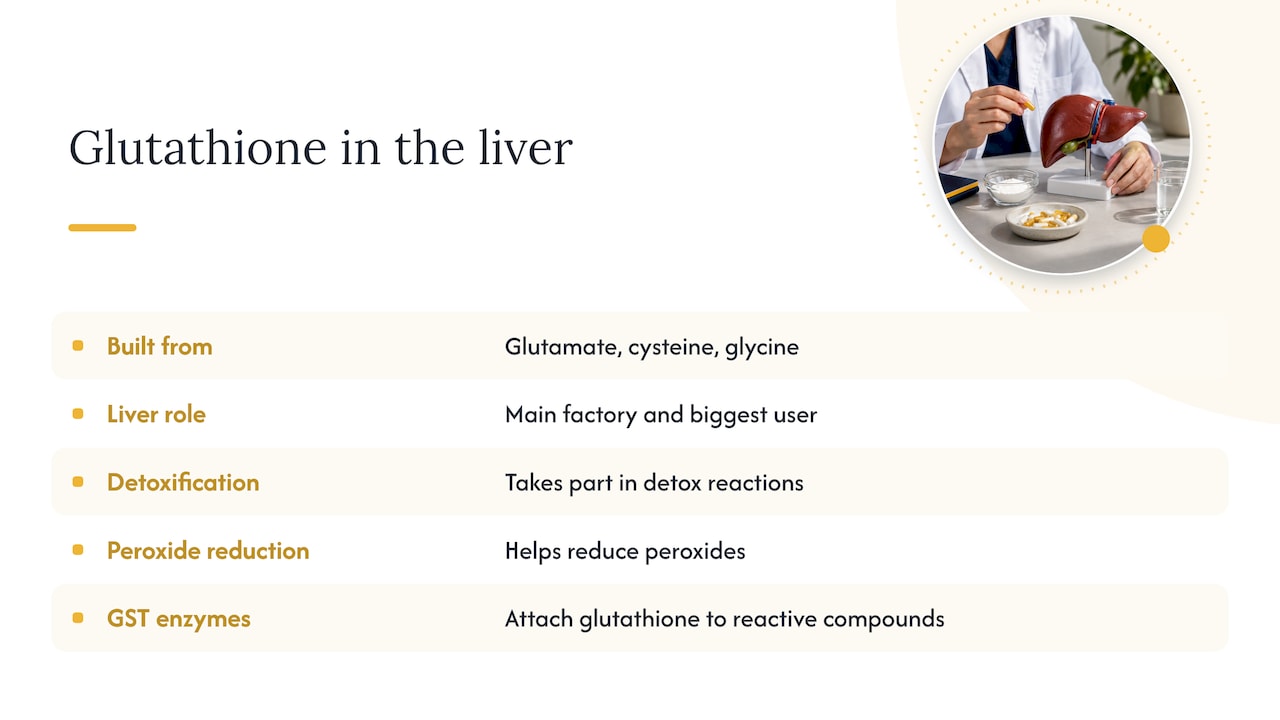
Glutathione is a small molecule built from three amino acids: glutamate, cysteine and glycine. Almost every cell makes it, but the liver is the main factory and the biggest user. Researchers describe hepatic glutathione as taking part in detoxification reactions and peroxide reduction, and in maintaining the cell's redox balance. Redox balance simply means the cell's ability to keep oxidizing and reducing reactions in check, so that reactive molecules do not damage its structures.
A 2023 peer-reviewed review adds detail. It describes glutathione as part of peroxide detoxification, antioxidant defense and the glutathione-S-transferase enzymes that attach glutathione to reactive compounds so the body can clear them. In plain terms, when your liver handles a medication, alcohol, a pollutant or the byproducts of its own metabolism, glutathione is one of the tools it reaches for.
Why that matters for the reader who trains hard, sleeps little or works long shifts: the liver is busy in all of those situations. Heavy exercise, stress and a poor week of eating all add to the load of molecules the liver has to process. Animal-model work has also shown that severe depletion of liver glutathione can produce liver pathology, which is one reason glutathione status keeps attracting research attention.
That is the biology. The harder question is what happens when someone adds glutathione from outside the body, and the research is at an early stage there.
What studies of glutathione and the liver have reported
Most of the human research on glutathione and liver health looks at fatty liver disease, a condition in which fat builds up in liver cells. The studies below are small, and each one deserves a plain description of what was actually done.
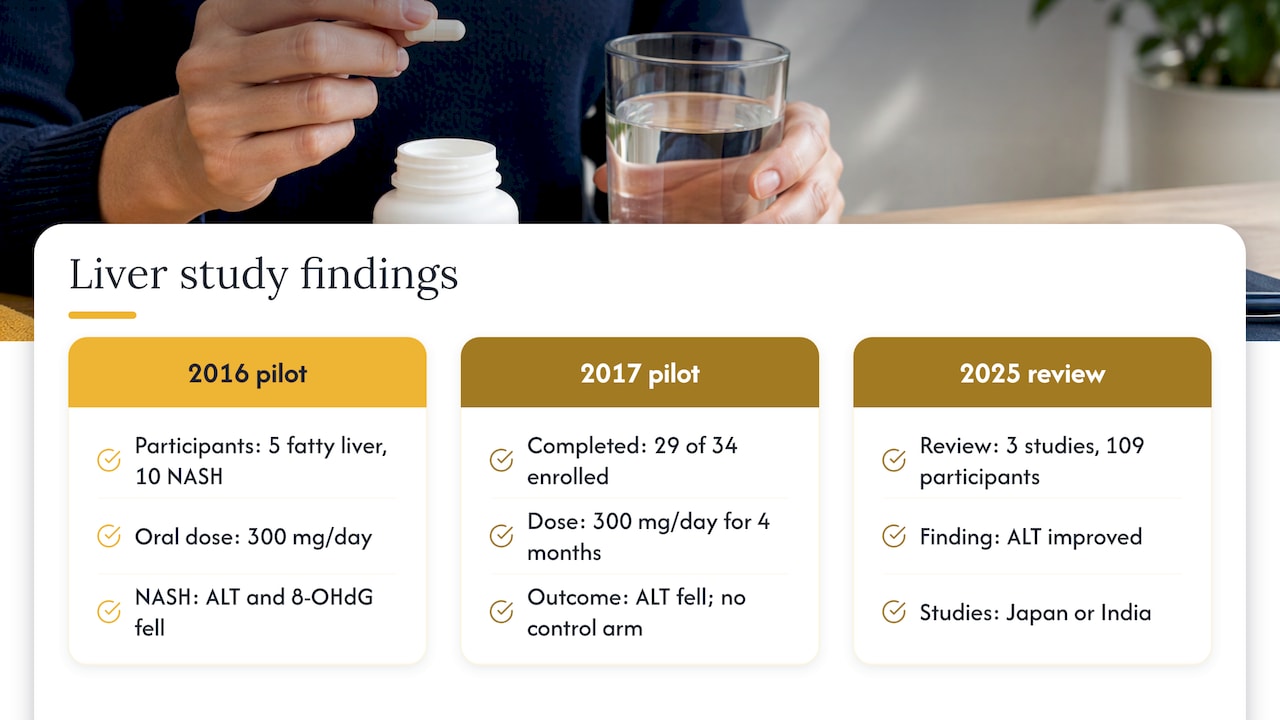
A 2016 pilot study. Researchers gave oral glutathione, 300 mg per day, to five people with fatty liver and ten with NASH, the more advanced inflammatory form. ALT and an oxidative-stress marker called 8-OHdG dropped significantly in the NASH group.
A 2017 pilot study. Of 34 people with nonalcoholic fatty liver disease who enrolled, 29 completed a lifestyle program followed by oral glutathione 300 mg daily for four months. ALT fell significantly after treatment. This was an open-label study with a single group and no control arm.
A 2025 literature review. The review pooled three such studies, 109 participants in all, and reported ALT improvements. It also noted that all three were done in Japan or India, so larger trials in broader U.S. populations are the next step.
What you can take from this: researchers have seen encouraging movement in liver enzyme markers when glutathione is paired with lifestyle changes, and the antioxidant mechanism is plausible. What you cannot take from it is a promise. A 2023 review of the evidence describes the fatty liver studies as pilot-level and says larger studies are needed to establish the best route and dose. No study we know of compares oral glutathione head to head with an infusion for liver support, so no one can say honestly that one route is proven better for the liver.
Glutathione is not a treatment for liver disease. If a blood test has shown high liver enzymes, or you have been told you have fatty liver, hepatitis or cirrhosis, your physician decides how that is evaluated and treated. Glutathione, if you want it, is something to discuss with that physician first.

Signs of low glutathione: what you can and cannot tell
People often search for symptoms of low glutathione. The honest answer is that tiredness, slow recovery or feeling run down have many causes, and none of them points specifically to glutathione. A 2024 systematic review of glutathione-related markers in metabolic liver disease found wide variation in how samples were processed and measured, which prevents anyone from setting reliable diagnostic cutoffs. In practice, there is no standard everyday test that tells you your glutathione is low.
What a nurse can do is talk through your goals, your health history and your medications, then recommend an infusion that fits. That conversation is more useful than guessing from symptoms.
Oral, IV or injection: choosing a route
Glutathione comes in several forms, and the human liver studies above used oral capsules. Infusions and injections deliver it another way. Here is how the routes compare for someone planning a wellness routine.
| Route | How it is used | What to know |
|---|---|---|
| Oral capsules or liquids | Taken daily at home | Most liver studies used 300 mg per day for months. Supplement quality varies by brand and label. |
| IV infusion (drip) | Given in a clinic by a nurse over a set time | Delivered directly into the bloodstream. Needs sterile, injectable-grade ingredient and trained administration. |
| IV push | A faster, shorter administration in clinic | Same sterility requirements as a drip. |
If you buy oral supplements, learning how to read a supplement label, including what a proprietary blend hides, helps you see how much active ingredient you are actually getting.
For a closer look at the two clinic formats, our guide to glutathione push versus drip explains the differences and how to choose, and our overview of the glutathione injection covers benefits and risks.
What the FDA says about IV glutathione, and how to use it safely
This is the part of the topic where the details protect you. The FDA has issued two alerts about injectable glutathione made from the wrong grade of ingredient.
In June 2019, the agency described adverse events in seven patients who received compounded IV glutathione. FDA testing found excessive bacterial endotoxin in ingredient samples, in some cases up to five times the appropriate limit. One patient was hospitalized after fever, chills and shaking following an infusion. Endotoxin is a toxic fragment of bacteria that can cause that kind of reaction when it enters the bloodstream.
On August 27, 2026, the FDA issued a reminder to compounders not to use dietary-supplement-grade glutathione in injectables. The agency reported knowing of at least 30 patients with adverse events after IV glutathione, alone or combined with other ingredients, and said it was investigating.
What this means for you:
- The problem the FDA describes is the ingredient grade used for injectables, not glutathione the molecule. A product made for a capsule is not made for a vein.
- Reactions the FDA linked to endotoxin include fever, chills and shaking during or after an infusion. If you feel any of these, tell the nurse right away, and seek emergency care if symptoms are severe.
- IV therapy should be done by licensed medical staff in a clinical setting, with your health history reviewed first.
- If you have liver disease, kidney disease, are pregnant or nursing, or take prescription medications, speak with your physician before booking.
Our own write-ups on this are worth a read before your first visit: the FDA 2026 advisory and clinic checklist and the piece on IV hydration side effects.
Glutathione compared with NAC, milk thistle and vitamin C
These are the three names that come up beside glutathione whenever people research liver support, and each does something different.
- NAC (N-acetylcysteine) supplies cysteine, one of the building blocks the body uses to make its own glutathione. Our comparison of glutathione and NAC explains how they differ.
- Milk thistle is a plant extract that people take for the liver. See glutathione versus milk thistle for which one does what.
- Vitamin C is an antioxidant that works alongside glutathione in the body. Our guides on glutathione versus vitamin C and on glutathione with vitamin C walk through how they pair.
The point is that these are different tools for different goals. Part of a good consultation is working out which of them, or which combination, matches what you want.
Who tends to ask about glutathione, and what they want from it
The people who come to us asking about glutathione and the liver usually fall into a few groups.
College students. Late nights, irregular meals and weekend socializing leave you feeling drained. Students want hydration and recovery support, and glutathione sometimes comes up because of its reputation as the body's master antioxidant. We offer a discount for college students.
First responders. Long shifts, disrupted sleep and physical stress are part of the job. Many want a recovery routine that fits around their schedule. We offer a discount for first responders.
Athletes and active people. Hard training raises oxidative stress, and recovery is the goal. Our Endurance infusion is built for that, and glutathione is sometimes a point of discussion alongside it.
Anyone interested in anti-aging and cellular wellness. Glutathione is part of the conversation about cellular health, along with NAD+ and peptide therapies. If you are exploring those, a nurse can talk you through how they differ.
None of these goals is a liver diagnosis, and none of them replaces medical care. They are wellness goals, and wellness goals are what an infusion is for.
What a glutathione session at Vitaluxe looks like
We are a nurse-led clinic with a boutique setting, and our approach is built around personalization. That means you are not handed a one-size menu. We talk through what you want, what your week looks like and what your health history is, then recommend a service.
Here is what the relevant services cost, as published on our site:
| Service | Price |
|---|---|
| Glutathione infusion | $220 per session |
| High Dose Vit C | $185 to $395 per session |
| NAD+ IV 125 mg | $199 per session |
| NAD+ IV 250 mg | $334 per session |
| Normal Saline | $120 per session |
| Red Light Therapy | $35 per session |
| B12 injection | $25 per session |
If you plan to come regularly, the monthly memberships are $205 for Essential and $415 for Elite. Our packages page lists bundled options too.
Book a glutathione infusion
If you have talked with your physician and want to add a glutathione infusion to your routine, we can set it up. Our nurses review your goals and health history first, and you can see every treatment and price on our services page. Those on a regular schedule often find a membership is the simplest way to keep going.

We serve clients across Long Island, including Massapequa, Merrick, Bellmore, Wantagh, Seaford, Amityville, Babylon, Lindenhurst and Farmingdale.
Our perspective
When someone sits down with us and says they want to support their liver, the first thing we do is slow the conversation down. The liver is one of the most important organs you have, and glutathione is a real part of how it works. That is exactly why we want the person in the chair to understand what they are getting.
What we believe is simple. Advanced wellness therapies belong in the hands of medical professionals. Our approach is nurse-led, personalized and focused on results you can feel, whether that is energy after a hard week, recovery after training or support during a stressful semester. A glutathione infusion is one of the ways we help with cellular wellness, and we pair it with the rest of what we offer, from vitamin C and NAD+ to red light therapy, when that fits your goals.
The FDA's attention to ingredient grade in IV products reinforces what we already hold to: a vein deserves clinical-level care. A boutique setting with a nurse at your side is how we think this should be done. Come in, tell us what you are after, and we will build the plan around you.
Debbie
FAQ
What is the downside of taking glutathione?
For oral glutathione, the studies on fatty liver did not highlight serious problems, but quality varies between supplement brands. For IV glutathione, the FDA has warned about reactions such as fever, chills and shaking tied to endotoxin in dietary-supplement-grade ingredient used for injectables. This is why IV therapy belongs in a clinical setting with licensed medical staff, and why anyone with a liver condition or regular medications should speak with their physician first.
Can glutathione reverse liver damage?
No supplement or infusion is a proven way to reverse liver damage. Small studies of oral glutathione in fatty liver reported improved ALT, but they were pilot studies and researchers call for larger trials. Liver damage needs to be evaluated and managed by your physician. Glutathione is a wellness option you can discuss with them, not a replacement for care.
What are the signs of low glutathione?
There is no reliable everyday test or symptom list that identifies low glutathione. Fatigue and slow recovery can come from many causes, including sleep, nutrition and medical conditions. A conversation with a nurse about your goals and health history is a better starting point than trying to self-diagnose.
How much does a glutathione infusion cost at Vitaluxe?
A glutathione infusion is $220 per session. Monthly memberships are $205 for Essential and $415 for Elite. We also offer discounts for first responders and college students, so ask about them when you book.
Sources
- The importance and regulation of hepatic glutathione
- Glutathione: Pharmacological aspects and implications for clinical use
- Glutathione defense mechanism in liver injury
- Reduced glutathione suppresses oxidative stress in NASH and fatty liver (2016 pilot)
- Efficacy of glutathione for the treatment of nonalcoholic fatty liver disease (2017 pilot)
- A literature review of glutathione therapy in ameliorating fatty liver disease (2025)
- Glutathione: Pharmacological aspects and implications for clinical use, Frontiers in Medicine
- Alterations in glutathione redox homeostasis in metabolic liver disease (2024)
- FDA, 2019: concerns with dietary ingredient glutathione in compounded sterile injectables
- FDA, 2026: reminder to compounders on dietary supplement grade glutathione
- How to read a supplement label