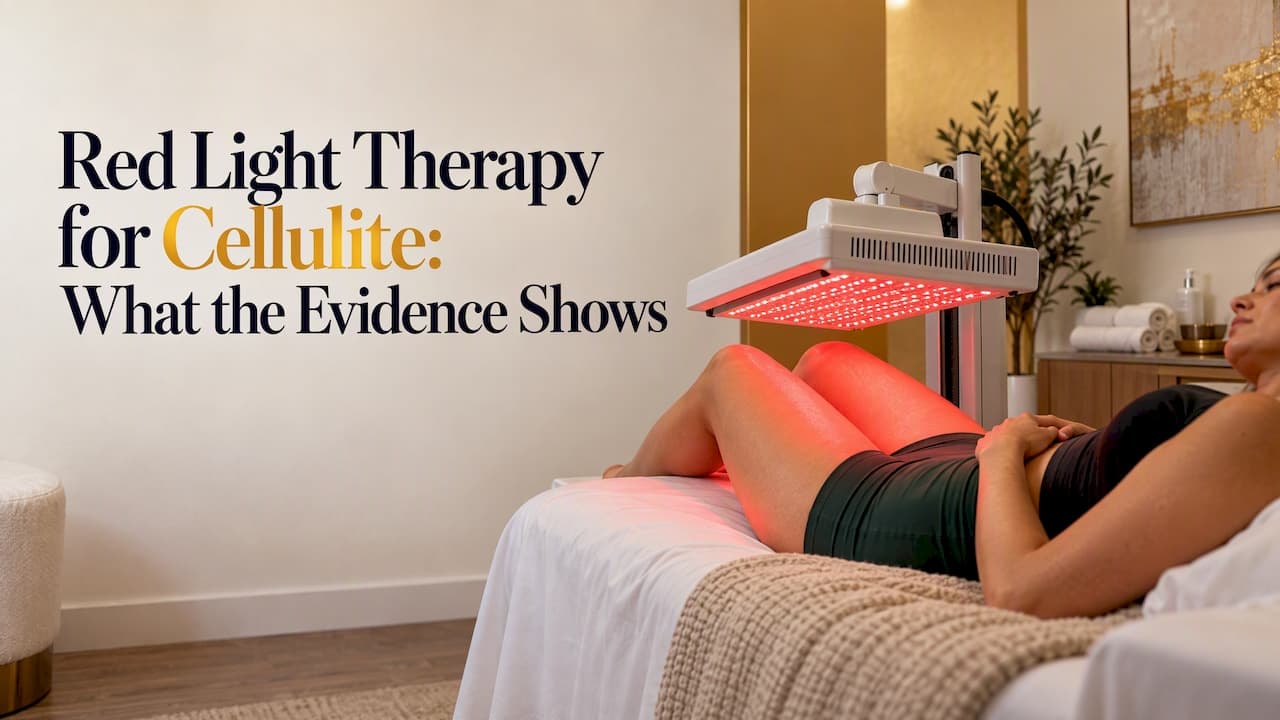
Red light therapy may soften the look of cellulite for some people, but it does not remove it. The research is thin, the results that exist are modest, and the biggest reviews call the evidence inconclusive. If you are weighing a session, this guide covers what the studies tested, what they found, where they fall short, and how to decide whether it is worth your money.
TL;DR
- Cellulite comes from fibrous bands pulling down on the skin while fat pushes up. Light cannot cut those bands, so no light treatment erases it.
- Some small trials show a visible improvement in appearance. Larger reviews say the evidence is inconclusive and the benefit may fade.
- Research protocols used repeated sessions over weeks or months, not a single visit.
- Red light appears safe in the short term when used as directed, but protect your eyes and ask a qualified professional first.
- Treat it as a supportive option for skin texture, not a cure.
Table of Contents
- What cellulite actually is
- How red light therapy is supposed to work
- What the studies found
- Light, laser and radiofrequency are not the same thing
- What a realistic protocol looks like
- How long results may last
- Safety and downsides
- How to judge any cellulite claim
- Our perspective on red light and cellulite
- Trying red light therapy with us
- Who is most likely to be happy with it
- Frequently asked questions
- Sources
What cellulite actually is
Cellulite is the dimpled, puckered look that shows up most often on the thighs, hips and buttocks. According to Cleveland Clinic, it forms when fibrous bands connecting the skin to the muscle underneath tighten unevenly. Those bands pull the skin down while fat pushes upward, and the surface looks uneven.
The same source says the exact cause is unknown. Theories include hormone levels such as estrogen and the way connective tissue fibers are arranged. In women the fibers run parallel, and in men they crisscross, which is one reason cellulite is far more visible in women.
This matters for the red light question. Cellulite is not just extra fat or a skin surface problem. It involves structure below the skin, and any treatment has to be judged on whether it reaches that structure or only improves how the skin looks above it.

How red light therapy is supposed to work
Red light therapy uses low levels of red light on the skin. Cleveland Clinic describes it as a treatment that is reported to improve skin appearance, including wrinkles, scars, redness and acne.
For cellulite, the proposed mechanism has three parts:
- Collagen remodeling. Light energy may nudge skin cells to produce more collagen, which could firm the surface.
- Microcirculation. Light and laser devices can warm local tissue and increase blood flow in small vessels.
- Fluid movement. Some sources suggest better circulation helps reduce swelling in the area.
A 2019 review of cellulite treatments says light and laser devices can heat tissue, stimulate collagen remodeling and increase microcirculation, which can improve how skin looks. It also says their effect on disrupting the fibrous septa, the bands behind the dimpling, is not substantial. That single sentence is the best summary of the whole topic: it can help the surface, and it does little to the cause.
What the studies found
There is real research here, just not much of it, and it varies in quality. Here are the trials worth knowing.
A positive double-blind trial
A double-blind, placebo-controlled randomized trial from 2013 used three sessions a week, spaced two to three days apart, for two weeks. Each session exposed the front and back of the hips, thighs and waist for 15 minutes per side, so 30 minutes in total. At least a one-stage improvement appeared in 55.88% of treated participants, compared with 8.82% in the sham group.

That is a meaningful gap. It is also a short, small, single trial from more than a decade ago, so it does not settle the question by itself.
LED bed combined with a topical
A randomized split-thigh and buttock study tested LED-bed low-level light therapy twice weekly for 20 minutes, lying face down and face up, over three months. It enrolled people with grade 1 to 2 cellulite. The combination of LED plus a topical gel worked better than LED alone. So even in a positive study, light by itself was not the strongest arm.
A 2024 trial on more advanced cellulite
A 2024 randomized, placebo-controlled trial treated women with grade 2 to 4 cellulite with 650 nm LED light three times a week for four weeks. Local LED treatment raised the pain threshold and lowered skin temperature. Those are physiological findings, not proof that the dimples looked smoother, so read it as an early signal rather than a result you can book.
The big-picture reviews
When researchers step back, the tone changes:
- A systematic review of 67 articles found no clear evidence of good efficacy for any of the cellulite treatments it evaluated. Only 19 of the 67 were randomized, placebo-controlled studies, and most had important methodological flaws.
- A 2023 clinical review calls the evidence for light and laser devices inconclusive. It notes one low-level laser study that reported improvement after six 30-minute treatments over two weeks, with the improvement lasting up to six weeks. It also lists the need for multiple sessions and limited durability as key limitations.
- Cleveland Clinic goes furthest. Its red light therapy page states there is no scientific evidence to support the technique for removing cellulite, and adds that some small studies show promise for certain conditions but the full effectiveness has yet to be determined.
Reading the evidence fairly
Both things are true at once. Some controlled trials show an improvement in appearance. The wider body of research is small, inconsistent in method, and short on long-term follow-up. A fair reading is that red light might help the look of mild to moderate cellulite in some people, that the effect is probably modest, and that it likely needs maintenance.
Light, laser and radiofrequency are not the same thing
One of the top-ranking papers on this keyword compares light-based devices with radiofrequency. Its conclusion on red and infrared lasers is blunt: they are too superficial to affect the deeper layer where the problem sits. That fits the 2019 review above. Red light mostly works on the upper layers of skin, so skin quality is where it has a chance to help.
If you want to understand the difference in depth, our post on red light versus laser therapy explains why depth matters more than the type of device. For anyone whose main goal is to change the structure under the skin, that is a different conversation, and a medical provider who treats cellulite directly is the right person to ask.

What a realistic protocol looks like
No one has established a standard dose for cellulite. What we can say is what the studies used:
| Study | Frequency | Session length | Duration |
|---|---|---|---|
| 2013 double-blind trial | 3 times a week | 15 minutes per side (30 total) | 2 weeks |
| LED-bed split-thigh study | Twice a week | 20 minutes | 3 months |
| 2024 650 nm LED trial | 3 times a week | Not specified in the summary we reviewed | 4 weeks |
The pattern is repeated sessions across weeks. A single visit is not what any of these trials tested. If a provider promises visible change from one session, treat that as a red flag.
Skin results from red light generally take time to show. Our post on red light therapy for skin walks through what a 12 to 16 week timeline looks like for texture and tone, and our look at before and after photos covers why photos can mislead when lighting, posture and angle change.
How long results may last
The 2023 review points to improvement persisting up to six weeks after treatment in one laser study, and flags limited durability overall. Plan for upkeep if you see a change. Collagen turns over slowly, and the bands that cause cellulite stay in place, so the surface can drift back toward where it started once you stop.
Safety and downsides
Cleveland Clinic says red light therapy appears safe when used as directed, in the short term. Misuse can damage the skin or eyes, and long-term safety of the devices is unknown. Its advice is to shield your eyes, follow directions, and consult a dermatologist or a qualified, trained cosmetic therapist.
In practice:
- Wear the eye protection you are given, every session.
- Tell the provider about photosensitizing medications, a history of skin cancer, pregnancy, or any skin condition in the area. Ask your doctor or dermatologist before starting if any of these apply.
- Skip sessions on skin that is sunburned, broken or newly irritated.
- Be wary of any provider who guarantees removal of cellulite.
How to judge any cellulite claim
Before you pay for any device or package, use the questions the National Center for Complementary and Integrative Health suggests for health news. Was it tested in people? Were enough participants studied? Was the result clinically meaningful? Were long-term risks and benefits looked at? Did independent studies replicate it? Most cellulite marketing fails at least two of those.
Apply the same test to at-home belts and panels. Home devices vary widely in power and quality, and the trials above used specific protocols you will not be able to confirm at home. If you are comparing the two routes, our post on clinic care versus home treatment for stretch marks covers a similar skin-texture question.
Our perspective on red light and cellulite
We get this question often, and our answer is the same each time: we will not tell you red light erases cellulite, because the evidence does not support that. What we can say is that light-based skin care is a reasonable, low-risk option when your goal is firmer-looking, better-textured skin and you understand the limits.
We are a nurse-led, boutique clinic, and that shapes how we talk about this. A clinical background means we ask about your health history and medications before a session, and we would rather set honest expectations than sell a promise. If cellulite is your main concern, we will tell you what light can and cannot do, and whether pairing it with other habits makes sense for you.
We also think cellulite is normal. Most women have some, and it is not a health problem. If a few sessions of red light make your skin feel smoother and you enjoy the routine, that is a fine reason to book. If you are hoping for a dramatic change, save your money and talk to a physician about options that act on the structure beneath the skin.
— Debbie
Trying red light therapy with us
At Vitaluxe Drip Lounge, Red Light Therapy is $35 per session. That price lets you test how your skin responds without committing to a large package. If you decide it is worth continuing, you can look at our packages or see everything we offer on our services page.

We serve clients across Long Island's South Shore, including Massapequa, Wantagh, Merrick, Bellmore, Babylon and Lindenhurst. Many people pair red light with recovery-focused treatments after hard workouts or stressful stretches, and we also offer discounts for first responders and college students. Ask us at booking and we will walk you through what fits your goals.
Who is most likely to be happy with it
Based on what the research shows, you are most likely to be satisfied if:
- Your cellulite is mild to moderate rather than deep.
- You want a modest improvement in skin texture and firmness.
- You can commit to a series of sessions over several weeks.
- You accept that upkeep may be needed.
You are more likely to be disappointed if you expect a permanent fix, want deep dimples gone, or plan on one or two visits.
It can also help to think of red light as part of a wider skin routine rather than a stand-alone fix. The skin benefits people report from light therapy, such as better tone and texture, are covered in our overview of what clinics see versus what the evidence shows. Reading that alongside the studies above gives you a realistic picture of the whole category.
Frequently asked questions
Does red light therapy reduce cellulite?
It may reduce how visible cellulite looks in some people, but it does not eliminate it. A 2013 double-blind trial reported at least one-stage improvement in 55.88% of treated participants versus 8.82% with sham treatment. Larger reviews call the overall evidence inconclusive, so expect a modest effect at best.
How many sessions would I need?
No standard exists. Studies used sessions two to three times a week for two to four weeks, or twice weekly for three months. Plan on a series of visits rather than one, and expect maintenance if you like the result.
Can red light therapy tighten skin?
It may help skin appearance by supporting collagen remodeling and circulation, according to a 2019 review. That is different from tightening loose skin in a lasting, dramatic way. Treat any skin firming as subtle and gradual.
Is red light therapy safe?
It appears safe in the short term when used as directed, and Cleveland Clinic notes the long-term safety of the devices is unknown. Always use eye protection and follow the provider's directions. See a dermatologist first if you have a skin condition, take photosensitizing medication or have a history of skin cancer.
Sources
- Cellulite: What It Is, Causes, Location & Treatment, Cleveland Clinic
- Red Light Therapy: Benefits, Side Effects & Uses, Cleveland Clinic
- Treatment for cellulite, PMC review (2019)
- A double-blind, placebo-controlled randomized trial of light therapy for cellulite (2013)
- The safety and effectiveness of low-level light therapy for cellulite
- Local and systemic photobiomodulation using a 650 nm LED (2024)
- Cellulite: An Evidence-Based Review, American Journal of Clinical Dermatology (2015)
- Cellulite: Current Understanding and Treatment, PMC (2023)
- Checklist for Understanding Health News Stories, NCCIH