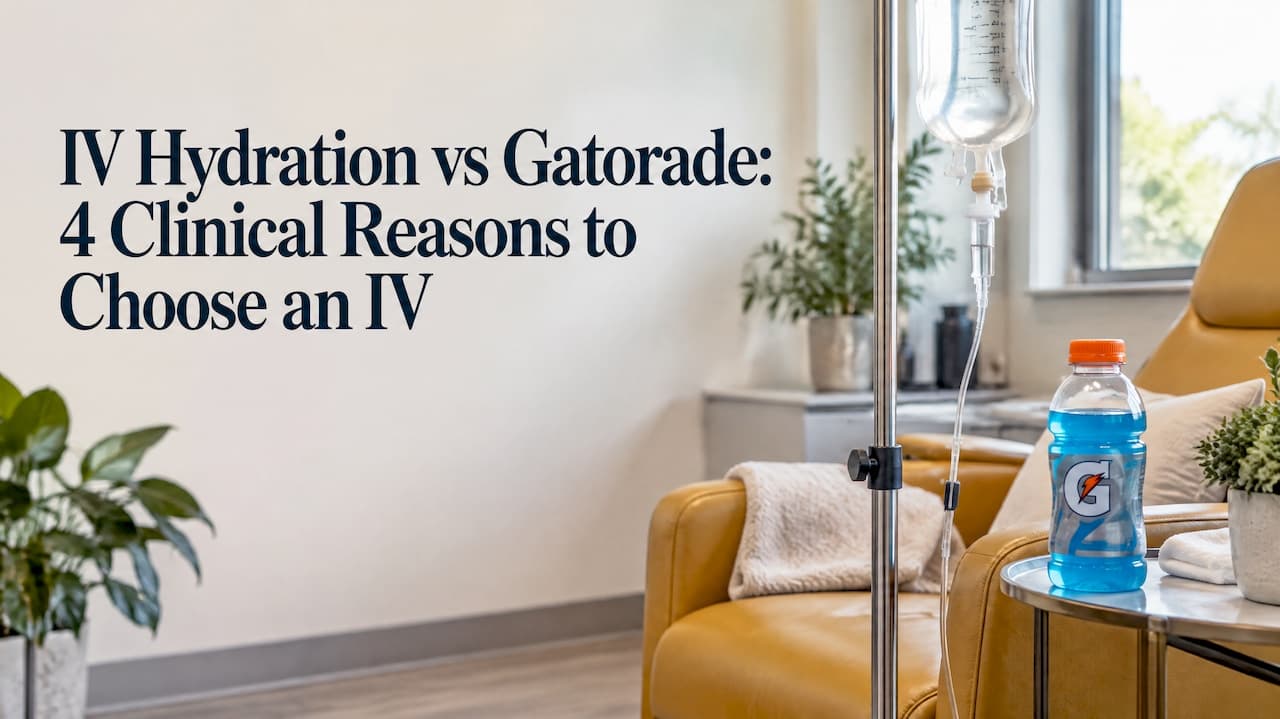
In-clinic IV hydration delivers fluids, electrolytes, and nutrients straight into your bloodstream under medical supervision, while Gatorade is an oral sports drink meant for mild, activity-related fluid loss. The deciding factor is almost always severity: when you can drink and absorb fluids normally, oral rehydration comes first. When you cannot, or dehydration is severe, IV treatment becomes the appropriate option.
TL;DR:
- For mild to moderate dehydration, oral rehydration performs comparably to IV fluids in many cases of pediatric gastroenteritis, with fewer complications and shorter hospital stays.
- Seek medical evaluation for persistent vomiting, confusion, fainting, very low urine output, or a rapid heart rate, because these signs may require urgent IV treatment.
- Before booking, confirm a clinician screens for medication use, heart or kidney conditions, allergies, and pregnancy, explains ingredients, and monitors the infusion.
- Evidence for broad wellness benefits from vitamin drips remains limited, and people with heart, kidney, or blood pressure conditions should seek clinical advice first.
Table of Contents
- How IV Hydration and IV Vitamin Drips Work vs Oral Electrolyte Drinks
- When IV Hydration Is Clinically Appropriate and When Oral Rehydration Is Preferred
- What to Expect at a Clinic and a Checklist to Choose a Safe Clinician-Led Provider
- Comparative Benefits of IV Hydration vs Gatorade for Athletic Performance and Recovery
- Nutrient and Electrolyte Composition Differences Between IV Hydration Therapies and Gatorade
- Effectiveness of IV Hydration vs Gatorade in Boosting Energy and Mental Clarity
- Situations Where Gatorade or Similar Oral Electrolyte Drinks May Be Preferable to IV Hydration
- Overview of the Role of Personalized IV Vitamin Therapy Formulations Compared to Standard Electrolyte Drinks
- Consumer Guidance: When to Choose IV Hydration Over Gatorade for General Wellness and Hydration Maintenance
- Publisher Perspective: A Clinician-Led Approach to IV Therapy
- Ready to Try Clinician-Led IV Hydration?
- FAQ
- Sources
How IV Hydration and IV Vitamin Drips Work vs Oral Electrolyte Drinks
Oral drinks like Gatorade travel through your stomach and intestines, where fluids and electrolytes absorb gradually into the bloodstream. That process depends on a functioning gut and the ability to keep liquids down. IV hydration skips digestion entirely: a clinician places a line directly into a vein, so fluids, electrolytes, and any added nutrients enter circulation immediately.
Common IV fluids include normal saline and lactated Ringer's solution, both used in medical settings to restore volume and basic electrolyte balance, according to Cleveland Clinic. Wellness-oriented IV vitamin drips often add components such as vitamin C, B vitamins, electrolytes, NAD+, or glutathione to a saline base.
Because the bloodstream route bypasses digestion, people often notice effects faster than with oral rehydration.
- Saline and lactated Ringer's restore fluid volume and basic electrolytes.
- Added nutrients like B vitamins or vitamin C ride along in the same infusion bag.
- Infusion time typically runs 30 to 60 minutes depending on the formula and volume.
Evidence snapshot: Cleveland Clinic notes that IV rehydration delivers fluids, electrolytes, and nutrients directly into the bloodstream, which is why it is reserved for severe dehydration or situations where oral intake is not possible.
When IV Hydration Is Clinically Appropriate and When Oral Rehydration Is Preferred
Severity and tolerance for oral fluids drive this decision more than preference, according to Mayo Clinic guidance treats mild to moderate dehydration with increased oral fluids or oral rehydration solutions, while severe dehydration calls for urgent IV fluids.
A substantial body of clinical research supports oral rehydration therapy (ORT) as the first-line treatment for many cases, including pediatric gastroenteritis. A systematic review published in PMC found that ORT performs comparably to IV fluids for many children with mild-to-moderate dehydration from gastroenteritis, with fewer complications and shorter hospital stays.
Clinical indications where IV treatment is generally appropriate:
- Severe dehydration with signs like extreme thirst, sunken eyes, or very low urine output.
- Persistent vomiting that prevents any fluid from staying down.
- Hemodynamic instability, including a rapid heart rate or low blood pressure from fluid loss.
- Inability to tolerate oral fluids due to illness, surgery recovery, or severe nausea.
Real-world scenarios help clarify the line. Someone with gastroenteritis who cannot stop vomiting, a person experiencing heat stroke, or someone who has fainted from significant fluid loss likely needs medical evaluation and possibly IV fluids. Routine post-workout thirst or mild dehydration after a hot afternoon almost always resolves with water or an electrolyte drink.
Pro Tip: If you can sip fluids and keep them down, start with oral rehydration. If vomiting, confusion, or fainting are present, seek medical evaluation rather than waiting it out.
What to Expect at a Clinic and a Checklist to Choose a Safe Clinician-Led Provider
Before any infusion begins, a responsible clinic screens you for medications, heart or kidney history, allergies, and pregnancy status. These factors affect which fluids and additives are safe, and a thorough intake process is one of the clearest signs of a well-run clinic.
On-site, you should expect a clinician or nurse present throughout, a clear explanation of what is in your bag, informed consent before the line goes in, and monitoring during the infusion. Reputable providers also have protocols in place for adverse reactions, however rare. Our guide on when an IV is actually needed for dehydration discusses how clinics assess severity before recommending treatment.
Questions worth asking before you book:
- Who is the medical director, and are they actively involved in protocols?
- Where do ingredients come from, and are they pharmaceutical-grade?
- What sterile-compounding practices are in place for any added nutrients?
- What is the expected cost and typical infusion length for your chosen treatment?
- What follow-up guidance do you receive after the session?
Infusion sessions commonly run 30 to 60 minutes, and most clinics price single sessions at various levels depending on the formula and additives.
Pro Tip: Ask to see the ingredient list before your line goes in, not after. A clinic that hesitates to share it is a clinic to skip.
Comparative Benefits of IV Hydration vs Gatorade for Athletic Performance and Recovery
Gatorade and similar oral drinks replace sodium, potassium, and fluid lost through sweat during exercise, which works well for routine training sessions and moderate heat exposure. The sugar content also supplies quick carbohydrates, useful for endurance activity.
IV hydration offers a different advantage for recovery: direct bloodstream delivery means rehydration does not depend on gut absorption, which can slow down after intense exertion or heat stress. For athletes dealing with significant fluid loss, muscle fatigue, or a demanding recovery window between events, a clinician-administered infusion can restore volume and electrolytes without relying on the digestive system to catch up.
That said, oral rehydration remains the practical choice for everyday training. IV therapy fits more specific recovery scenarios, such as after a marathon, a multi-day athletic event, or an unusually intense session that leaves someone struggling to rehydrate through drinking alone. Formulas like Endurance or Reboot are built around that kind of recovery need rather than routine post-workout thirst.
The distinction comes down to scale: Gatorade handles everyday fluid replacement, while IV hydration addresses recovery needs that go beyond what oral intake can efficiently restore in a short window.

Nutrient and Electrolyte Composition Differences Between IV Hydration Therapies and Gatorade
Gatorade's formula centers on sodium, potassium, and simple sugars dissolved in water, designed for quick oral absorption during exercise. It is not sterile and is not intended for anything other than drinking.
IV hydration formulas start with a sterile base, typically normal saline or lactated Ringer's, and can be customized with added electrolytes, B vitamins, vitamin C, or other nutrients depending on the goal of the infusion. Because these solutions enter the bloodstream directly, every ingredient must meet sterile compounding standards, a requirement that does not apply to a bottled sports drink.
The electrolyte profiles also differ in concentration and precision. A Gatorade bottle contains a fixed ratio of sodium and potassium designed for the general population. An IV drip can be adjusted by a clinician to match a patient's specific electrolyte needs, which matters most in cases of significant imbalance rather than routine hydration.
This composition gap is why the two are not interchangeable for every use case. Gatorade is a consumer product meant for self-administration; IV formulas are medical solutions meant to be prepared and administered under clinical supervision, with ingredient sourcing and sterility standards that a retail drink was never designed to meet.
Effectiveness of IV Hydration vs Gatorade in Boosting Energy and Mental Clarity
Both approaches can influence how you feel, but the evidence behind each differs. Mild dehydration is a well-documented contributor to fatigue and poor concentration, and correcting it with oral fluids, including Gatorade, often resolves those symptoms within a short time.
IV vitamin drips marketed for energy or mental clarity typically add B vitamins or vitamin C to a hydrating base. According to Cleveland Clinic Health Essentials, there is limited high-quality evidence that IV vitamin drips produce broad general-wellness benefits, and clinical oversight is recommended, particularly for people with heart, kidney, or blood pressure conditions. Some targeted uses, such as specific vitamin C dosing protocols, have more promising but still limited trial data behind them.
In practice, this means Gatorade can resolve energy dips and brain fog caused by straightforward dehydration, while IV vitamin therapy is better understood as a supplement to hydration rather than a guaranteed cognitive boost. People choosing an IV drip for energy are often responding to how the infusion feels, including rapid rehydration and nutrient delivery, rather than a proven mechanism unique to the vitamins themselves. Our piece on nurse-led IV therapy for jet lag describes how quickly people report feeling more alert after a session.

Situations Where Gatorade or Similar Oral Electrolyte Drinks May Be Preferable to IV Hydration
Oral rehydration remains the right first step for most everyday situations. Gatorade makes sense after a normal workout, during a hot day of yard work, or any time you are mildly thirsty and able to drink without difficulty.
Oral rehydration therapy has strong clinical backing as a first-line option. A PMC systematic review found ORT comparable to IV fluids for many cases of mild-to-moderate dehydration, with the added benefit of being noninvasive, inexpensive, and available immediately without a clinic visit.
Gatorade and similar drinks also make more sense when:
- You are managing routine hydration during travel, exercise, or hot weather.
- You have no trouble drinking and keeping fluids down.
- You want a low-cost, immediate option without scheduling a clinic visit.
- Symptoms are mild and improving, not worsening.
IV hydration involves a needle, a clinical setting, and a cost that oral rehydration does not. For the majority of daily hydration needs, a sports drink or water with electrolytes accomplishes the same goal without the added steps.
Overview of the Role of Personalized IV Vitamin Therapy Formulations Compared to Standard Electrolyte Drinks
Standard electrolyte drinks are formulated once for a broad population and sold identically to everyone who buys a bottle. There is no customization involved, and that is by design: Gatorade is meant to be simple, shelf-stable, and widely applicable.
Personalized IV vitamin therapy takes a different approach. A clinician can adjust the base fluid, add specific nutrients, and modify the formula based on a person's goals, whether that is rehydration after illness, recovery after intense exercise, or general wellness support. Formulations like Myers+, Clarity Boost, or LeanLuxe are built around different target outcomes rather than a single all-purpose mix.
This flexibility is a meaningful difference from an off-the-shelf drink, but it comes with a tradeoff: personalization requires a clinical setting, a screening process, and oversight to make sure the formula matches the person receiving it. Cleveland Clinic Health Essentials notes that broad wellness claims for these drips still lack robust randomized trial backing, even when specific targeted uses show more promising data.
The practical takeaway is that personalization adds value for people with specific goals who want a formula matched to their needs, while standard electrolyte drinks remain the simpler, evidence-backed choice for everyday hydration.

Consumer Guidance: When to Choose IV Hydration Over Gatorade for General Wellness and Hydration Maintenance
For most day-to-day hydration, Gatorade or a similar oral electrolyte drink is the practical, well-supported choice. It is inexpensive, available anywhere, and backed by decades of use for routine fluid replacement.
IV hydration becomes a reasonable consideration when you want a more thorough reset, such as after a demanding travel schedule, a period of illness, intense physical exertion, or when you are specifically seeking nutrient support alongside rehydration. It also fits situations where oral intake has been inconsistent, though not severe enough to require emergency care.
The decision ultimately comes down to goals and circumstances rather than one option being universally better. If you are simply thirsty after a run, reach for a sports drink. If you are recovering from a rough week, managing a demanding event schedule, or want a clinically supervised approach to replenishment, an in-clinic IV session offers a level of monitoring and customization that a bottled drink cannot provide.
Publisher Perspective: A Clinician-Led Approach to IV Therapy
Our view is that IV hydration earns its place in a wellness routine only when it is treated as a medical service, not a lifestyle product. Infusions administered by nurses under clinician oversight can draw on documented trial experience, including a 10-gram vitamin C protocol tracked across sessions to inform dosing and comfort.
Screening before treatment, transparent ingredient sourcing, and personalized formulations should be considered baseline practices. If you manage a cardiovascular or kidney condition, we recommend looping in your primary clinician before adding IV therapy to your routine, since those conditions change what fluids and additives are appropriate. Our trial-based energy protocol reflects that same standard: measured, supervised, and adjusted to the person receiving it.
— Debbie
Ready to Try Clinician-Led IV Hydration?
If you have read this far, you already know IV hydration works best as a targeted tool, not a replacement for your daily water bottle. Wellness menus can include offerings such as recovery-focused therapies, broader wellness support options, cellular energy treatments, high dose vitamin C protocols, and straightforward rehydration solutions.

Sessions administered under clinician oversight, with transparent ingredient sourcing, provide assurance before booking any iron infusion consultation. If you are weighing a one-off visit against ongoing support, our Essential and Elite membership plans are worth a look. Ready to get started? Browse our full menu of services and book a session that matches what your body needs right now.
This article is general information, not a substitute for advice from a qualified doctor. Consult a qualified healthcare professional about your own circumstances before acting on anything here.
FAQ
Is IV hydration better than Gatorade for everyday thirst?
For routine thirst and mild activity-related fluid loss, oral rehydration with a drink like Gatorade is the practical first choice. Mayo Clinic recommends increased oral fluids for mild to moderate dehydration, reserving IV treatment for severe cases.
How fast does IV hydration work compared to drinking fluids?
IV hydration delivers fluids directly into the bloodstream, which often produces noticeable effects faster than drinking, since there is no digestive absorption step involved. Typical infusion sessions run 30 to 60 minutes, and many people report feeling improvement during or shortly after the session.
Are there safety risks with IV vitamin drips?
Yes, particularly around sterile compounding. The FDA has warned that compounded sterile products can carry contamination and endotoxin risks when ingredients unsuitable for injectable use are involved, which is why clinician oversight and pharmaceutical-grade sourcing matter.
When should I choose IV fluids instead of an oral electrolyte drink?
IV fluids are appropriate for severe dehydration, persistent vomiting that prevents oral intake, or signs of hemodynamic instability like a rapid heart rate or fainting. For mild dehydration where you can drink normally, oral rehydration therapy is generally effective and is often the first-line approach according to clinical research.
What should I ask a clinic before booking an IV session?
Ask who oversees the medical director role, where ingredients are sourced, and what sterile-compounding practices are followed. A Yale News investigation found that oversight varies widely across IV hydration spas, so transparency on these points is a meaningful sign of quality.
Sources
IV therapy is a medical procedure, and the inputs matter as much as the delivery route. The FDA has warned that compounded sterile products can carry contamination and endotoxin risks, particularly when ingredients not suitable for sterile compounding are used in injectable solutions. That warning extends to some wellness settings where food-grade ingredients have been used inappropriately in place of pharmaceutical-grade inputs.
An investigation by Yale News found inadequate oversight at some IV hydration spas, reinforcing that clinic quality varies widely across the industry. Experts quoted in that reporting recommend clinics maintain strong medical oversight, such as an engaged medical director, before patients trust them with infusions.
Common adverse events associated with poorly administered IV therapy include infection at the injection site, vein irritation, and electrolyte imbalances from over-correction. Certain additives, including high-dose glutathione, have drawn specific FDA concern when compounded improperly for injectable use. You can read more about these risks in our deep dive on FDA alerts and adverse events.
Clinics should rely on pharmaceutical-grade inputs and appropriate sterile compounding practices. Use of food-grade ingredients for IVs is dangerous. Source: FDA
Medical oversight, meaning a named medical director, licensed nurses administering treatment, and transparent ingredient sourcing, reduces these risks substantially compared to unsupervised or loosely regulated settings.
- IV Fluids (Intravenous Fluids): Types & Uses — Cleveland Clinic
- IV Vitamin Therapy — Cleveland Clinic Health Essentials
- Enteral vs Intravenous Rehydration Therapy for Children With Gastroenteritis — PMC
- Dehydration — Diagnosis & treatment — Mayo Clinic